New Greater Boston Jewish Community Study Shows Increase in Jewish Households Across Region, Vibrant and Multidimensional Community
Once-in-a-decade study sponsored by Combined Jewish Philanthropies, Greater Boston’s Jewish Federation, outlines shifting makeup and viewpoints among community
BOSTON – (February 12, 2026) – Combined Jewish Philanthropies (CJP) today released the findings of its once-a-decade study on the Greater Boston Jewish community. The comprehensive report, 2025 Greater Boston Jewish Community Study, reflects a year of research drawn from a representative sample of nearly 4,800 adults residing in Jewish households in Greater Boston. Its findings highlight evolving demographics as well as shifting engagement within Jewish life, and diverse views on antisemitism and Israel during an important post-10/7 inflection point for Jews across the region.
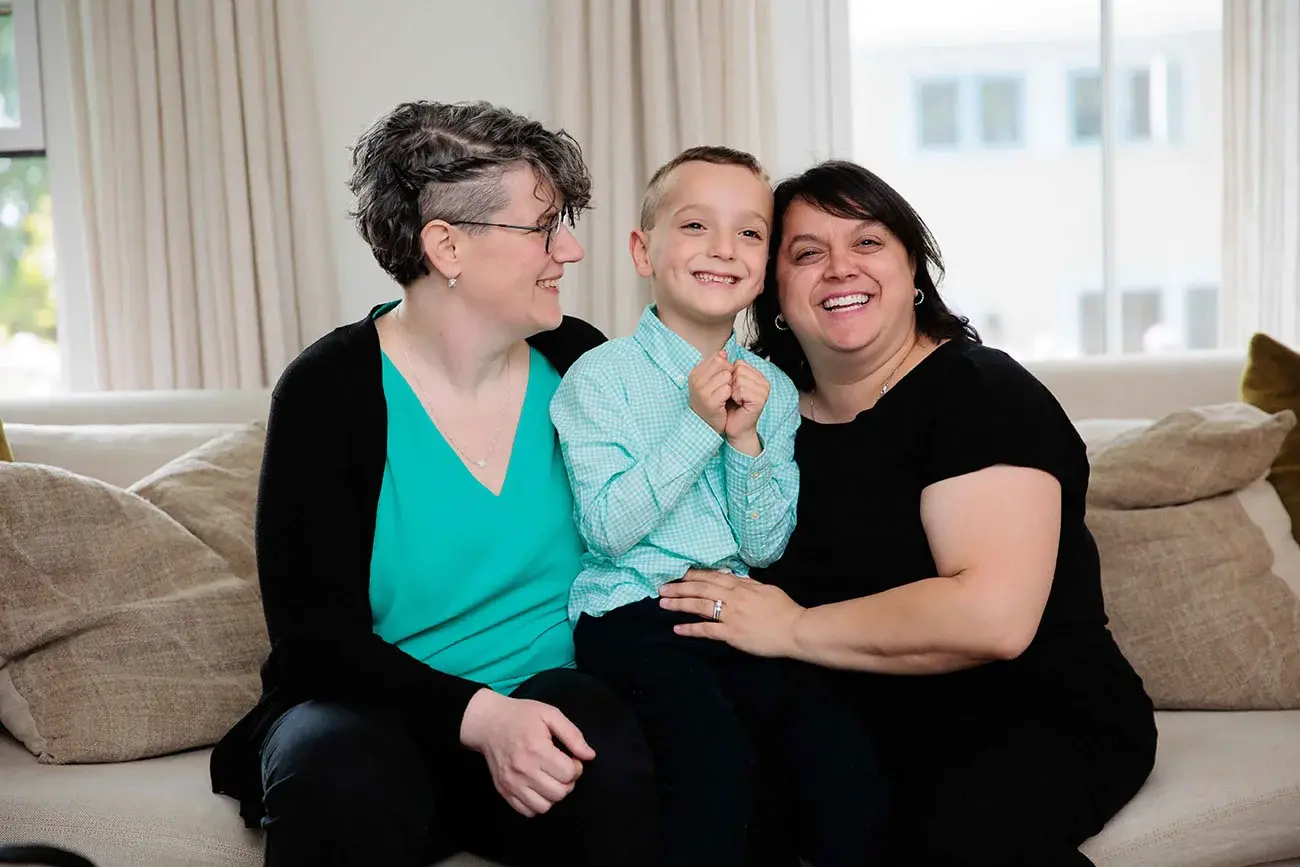
The study illustrates a thriving, dynamic and multidimensional Jewish community with shared interests and commitments, even as some shifting viewpoints along generational lines have emerged. Data reveals there are 138,200 Jewish households across Greater Boston, made up of more than 333,000 people, an 8% increase since 2015. Among those living in these households, 228,500 people identify as Jewish, while more than 100,000 do not. This shows the contours of Jewish families are changing and there are opportunities to engage them in new ways. A majority (51%) of Jewish households in the region now include someone who does not identify as Jewish, while 65% of Jewish households with children are interfaith households.
“Our findings show that over the last decade Greater Boston’s Jewish community has become more diverse in background and experience yet remains deeply rooted in the values that have guided our people for millennia,” said Rabbi Marc Baker, CEO and President of Combined Jewish Philanthropies. “This report offers a roadmap not only for CJP and our partners, but also schools, public institutions, and businesses across Greater Boston to better understand the needs of Jewish residents and ensure they feel safe, supported, and able to thrive across generations.”
Jewish Connections
Across Greater Boston, Jewish identity runs deep and the ways people connect to community vary. Jewish life thrives in homes and friendships through holiday celebrations, shared meals, and cultural traditions. In the year leading up to the survey, 65% of Jewish adults attended in-person or online events, activities, or programs hosted by a Jewish organization.
The majority (80%) of Jewish adults donated to charity in the 12 months before the survey, underscoring strong values of tzedakah (charitable giving) and responsibility for one another and the broader world. Among shared interests and beliefs, the Jewish community sees as essential are things like Holocaust remembrance (76%), ethical living (71%), and family traditions (56%), all of which most respondents view as a common core to being Jewish.
Local Jews also find wide-ranging opportunities to opt into Jewish life. Nearly one-third of Jews (31%) say they or someone in their household are members of or regular participants in a synagogue. Most Jewish adults (86%) observe holidays throughout the year, and 38% observe Shabbat in some way.
Jewish education is intergenerational and sustaining, with parents who had multiple Jewish educational touchpoints growing up being more likely to provide similar opportunities for their children. Adults who went to Jewish day school or yeshivas are more than four times as likely to enroll their children than adults who did not. Similarly, children of adults who participated in Jewish overnight summer camp are twice as likely to attend camp than those whose parents did not growing up.
Community Concerns Around Antisemitism, Safety and Well-Being
Amid national and global surges in antisemitism, Jews in Greater Boston are increasingly focused on safety and community response to such incidents. Nearly all Jewish adults express concern about antisemitism globally (94%). On a local level, 65% of respondents are somewhat or very concerned about antisemitism in Greater Boston with 42% expressing that same level of worry in their local city or town.
Nearly one in four (23%) Jews in Greater Boston report personally experiencing or witnessing antisemitism, most of which manifests as overhearing or witnessing antisemitic remarks. More than one in three respondents (37%) said they have changed their behaviors – including wearing something that identifies them as Jewish or how they post content or speak about Israel – due to concerns for personal safety. Only 29% feel very confident in their ability to report antisemitism and just 24% know where they access communal support if they are a target of antisemitism.
Other concerns around communal well-being also remain high. A third of Jewish households (33%) report feeling one or more indicators of economic adversity, with 13% falling below 250% of the federal poverty line and 17% expressing they cannot or are just managing to make ends meet. Fourteen percent of Jewish adults experience loneliness or depression. Those numbers increased for those with a disability (42%), Jewish persons of color (38%), young adults between the ages of 18-29 (28%) and LGBTQIA+ individuals (26%).
“We have a shared responsibility to become more effective allies and closer partners to ensure the wellbeing of our Jewish neighbors, and this study is an important marker,” said the Boston Foundation President and CEO Lee Pelton. “It ensures our region’s leaders have a data-driven portrait of Jewish life the helps them understand how people identify, connect, and live. This report is a guidepost for setting priorities, including building closer coalitions between civic institutions representing communities that make up the rich fabric of our city.”
Generational Differences on Jewish Identity and Antisemitism
The study outlines varied generational views on topics central to Judaism including Jewish identity and antisemitism, suggesting younger generations are encountering and making sense of the world differently than their elders.
While nearly 80% of all Jewish adults feel that being Jewish is very or somewhat important to them, this tends to be more common among older Jews compared to their younger peers. Similarly, Jews aged 18-29 tend to feel less connected to the Greater Boston Jewish community (40%) and their local communities (36%) than respondents who are 75 years or older (57% and 51%, respectively).
Thirty-six percent of younger Jews report being somewhat or very concerned about antisemitism in Greater Boston, while that figure rises to 80% among the oldest cohort. At the same time, younger Jews are more likely than any other age group to change their behavior in response to antisemitism such as avoiding certain places or events, being less likely to identify as Jewish in public, or limiting what they post online. More than half (55%) of those ages 18–29 reported altering at least one of these behaviors, compared with 37% of all respondents.
Widespread Commitment to Israel, But Differing Views
The study reveals a deeply held commitment to Israel by most Jewish adults, though the nature of that commitment and views on Israel vary widely, especially among different age groups.
Overall, eight in 10 people agree that Israel should be the nation-state of the Jewish people, with 68% saying that having a connection to Israel is an essential component of being Jewish. Slightly more than half (53%) of Greater Boston Jews have been to Israel.
Among younger adults ages 18–29, 38% identify as somewhat or strongly anti-Zionist, compared to just 11% of adults 45–64 and 65 and up. Still, of those young adults, 30% agree with the statement that it’s important for Israel to be the nation-state of the Jewish people, illustrating a difference over terminology and a lack of shared definitions of ‘Zionism’ and ‘anti-Zionism.’ This is consistent with other recently released national data.
Study Methodology
This study was conducted between December 2024 and April 2025 by employing surveys, interviews, and focus groups. Based on a representative sample of 4,776 Jewish households across Greater Boston, follow up interviews and focus groups with some respondents. Twelve sub reports explore the topics of accessibility, antisemitism, connection, diversity, education, families and households, geography, Jewish identity, Israel, and community well-being. It was sponsored by Combined Jewish Philanthropies and conducted by Rosov Consulting with SSRS.
To download the complete 2025 Greater Boston Jewish Community Study please click here.
###
About the 2025 Greater Boston Jewish Community Study
For the past 60 years, CJP has sponsored a comprehensive, scientific community study every decade to deepen the understanding of Jewish life in Greater Boston — exploring how people connect, what they need, and how the community is changing. The 2025 Greater Boston Jewish Community Study, the seventh of its kind, marks a transformative shift: it initiates a decade-long journey of continuous learning and engagement. This new approach enables ongoing insight into the community’s experiences, challenges, and emerging needs, strengthening CJP’s ability to serve Greater Boston’s Jewish community.
About Combined Jewish Philanthropies
Founded in 1895, Combined Jewish Philanthropies (CJP) is Greater Boston's Jewish Federation and was created with the purpose of building vibrant Jewish communities and igniting positive change at home, in Israel, and around the world. As a philanthropic organization driven by Jewish values, learning, and culture, CJP mobilizes communal philanthropy and provides grants, builds partnerships, and brings Greater Boston's diverse Jewish community together. For more information, please visit www.cjp.org.